Measuring access to the places that facilitate social interaction and build community across America.
Third places, coined by Ray Oldenburg in his book The Great Good place, are informal public gathering spots, cafes, parks, libraries, barbershops, where people come together for conversation and community. They exist outside home ("first place") and work ("second place"). These spaces are vital for social connection and belonging.
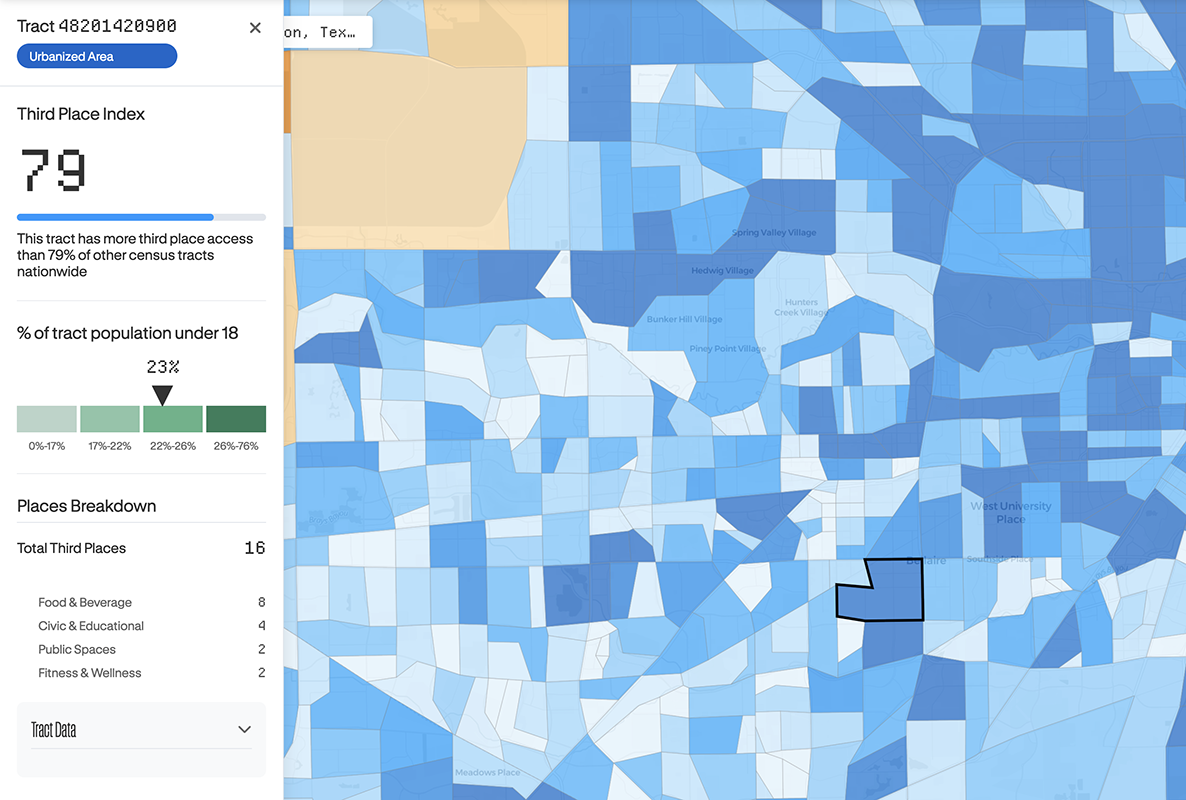
The Third Place Index scores every U.S. census tract from 0–100 based on access to these types of spaces. This score determined by point of interest data queried from OpenStreetMap for each location type.
Higher scores mean more places to connect and build community. Lower scores mean fewer options and more isolation.
Search your home address (or any U.S. address) to see your neighborhood's Third Place Index score and see how third place access varies in your area.
Launch Map
In our post-pandemic world, we are growing more socially isolated. In this article, we look at what this means for families with children, and look deeper into the access to Third Places that these families have.
Read the ArticleNew tools, research, data updates, and insights on third places and community building are on the way. Sign up to receive updates first.